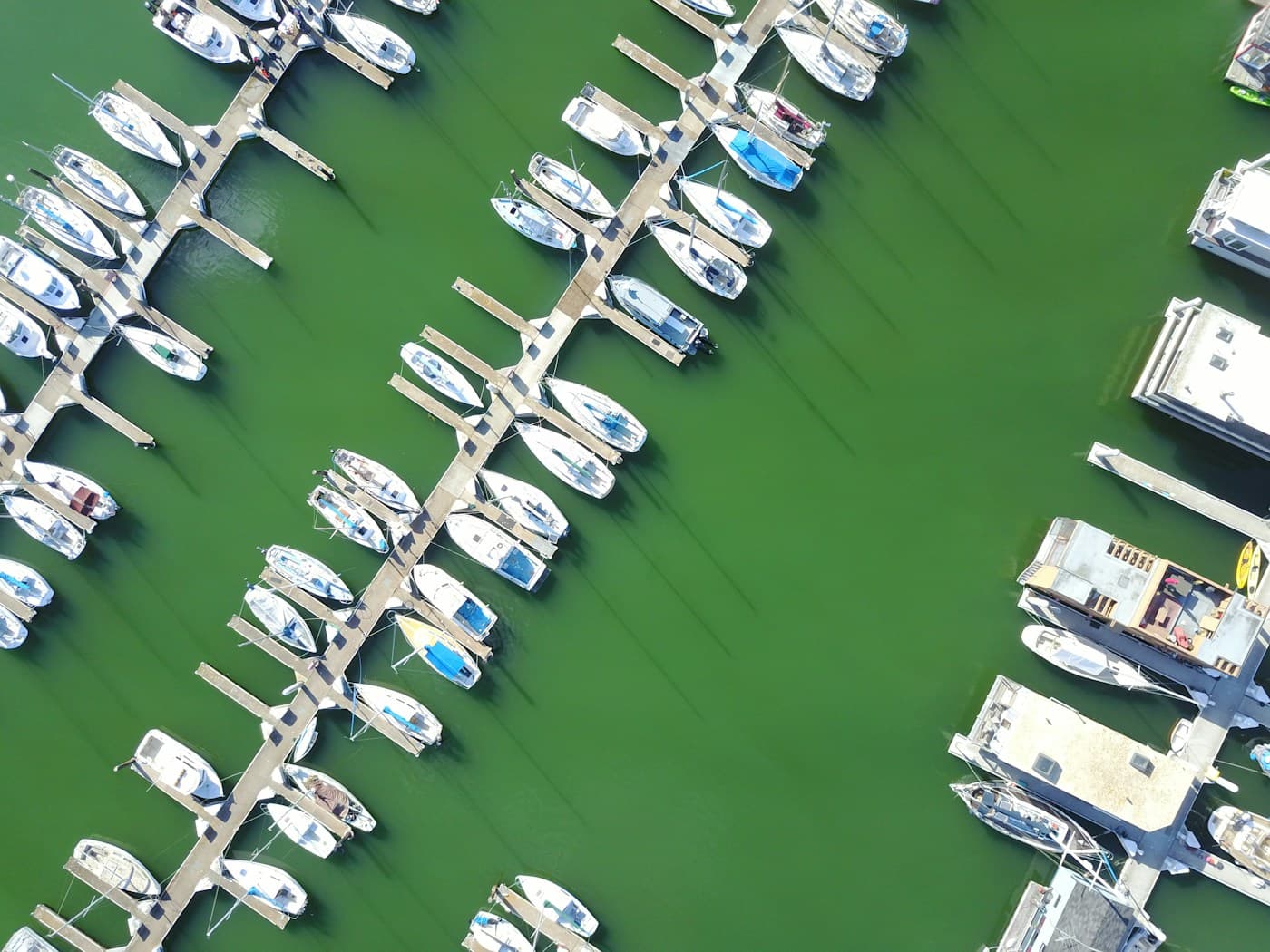
Why Marina Due Diligence Is Different
Buying a marina is not like buying a strip mall or an apartment building. The water-dependent infrastructure, environmental exposure, and regulatory complexity make marina due diligence uniquely challenging — and uniquely important. Miss a critical issue during diligence, and you could be facing six- or seven-figure liabilities after closing.
We built this checklist from watching what goes wrong in real transactions — the environmental surprises, the seawall failures, the submerged land lease gotchas that kill deals at the closing table. Whether you're a first-time buyer or an experienced operator adding to your portfolio, use this as your roadmap.
1. Environmental Assessment
Environmental risk is the single biggest hidden liability in marina transactions. Fuel operations, boatyard activities, and decades of waterfront industrial use can leave contamination that costs millions to remediate.
Phase I Environmental Site Assessment (ESA)
A Phase I ESA is the mandatory starting point. Conducted by a licensed environmental consultant, it reviews historical records, aerial photographs, regulatory databases, and site conditions to identify recognized environmental conditions (RECs). Key areas to flag:
- Fuel storage history: Current and former underground storage tanks (USTs). Even removed tanks can leave contaminated soil and groundwater.
- Boatyard operations: Bottom paint stripping, fiberglass repair, and engine work generate hazardous waste. Has it been properly managed and disposed of?
- Adjacent properties: Dry cleaners, gas stations, and industrial facilities near the marina can create off-site contamination that migrates onto your property.
- Historical use: Was the site previously used for shipbuilding, manufacturing, or waste disposal?
Phase II ESA (If Warranted)
If the Phase I identifies RECs, a Phase II involves actual soil borings, groundwater monitoring wells, and laboratory analysis. This confirms whether contamination exists and estimates cleanup costs. Common contaminants at marina sites include:
- Petroleum hydrocarbons (gasoline, diesel, hydraulic oil)
- Heavy metals (lead, copper, zinc from antifouling paints)
- Polycyclic aromatic hydrocarbons (PAHs) from creosote-treated pilings
- Tributyltin (TBT) from legacy hull paints in sediment
Sediment and Water Quality
Marina basins accumulate contaminated sediment over decades. If dredging is needed (and it often is), sediment testing determines whether dredged material can be disposed of as clean fill or requires expensive hazardous waste handling. Test for metals, PAHs, PCBs, and pesticides.
2. Structural and Physical Inspection
Marina infrastructure is constantly under attack from saltwater, weather, UV exposure, and biological organisms. A qualified marine engineer or surveyor should inspect every major system.
Docks and Floating Structures
- Material and age: Wood, aluminum, concrete, or composite? Expected useful life varies dramatically — wood docks may last 15-20 years, concrete 30-50 years.
- Connection hardware: Cleats, pile guides, finger pier connections, gangways. Corroded or undersized hardware is a safety and insurance concern.
- Flotation: Are floats intact or waterlogged? Expanded polystyrene floats degrade and must be encapsulated per modern environmental standards.
- ADA compliance: Gangway slopes, accessible routes, and compliant boarding facilities per the ADA Standards for Recreational Boating Facilities.
Pilings
- Material: Wood (treated), steel, concrete, or fiberglass? Each has different failure modes and lifespans.
- Condition: Check for marine borer damage (teredo worms, limnoria) in wood pilings, corrosion in steel, and spalling in concrete. Underwater inspection is essential — damage below the waterline is invisible from the surface.
- Replacement cost: Budget $2,000-$8,000 per piling depending on material, depth, and access.
Seawalls and Bulkheads
- Steel sheet pile: check for section loss from corrosion, especially at the mud line and splash zone
- Vinyl sheet pile: check for UV degradation, cracking, deflection
- Concrete: check for cracking, spalling, rebar exposure
- Riprap: check for settlement, displacement, undermining
- Replacement cost: $1,000-$3,000+ per linear foot — often the single largest capital expenditure at a marina
Fuel Systems
- Tank type (underground vs. aboveground), material, age, and capacity
- Leak detection and monitoring systems — are they current with state regulations?
- Spill prevention, control, and countermeasure (SPCC) plan — is it current and compliant?
- Dispensers, piping, vapor recovery systems — age and condition
- Fire suppression at the fuel dock
Electrical Systems
- Shore power pedestals: 30A/50A/100A service, GFCI protection, code compliance
- Main electrical service and transformers — capacity adequate for current and future demand?
- Compliance with NFPA 303 (Fire Protection Standard for Marinas and Boatyards) and NEC Article 555 (Marinas, Boatyards, and Commercial and Noncommercial Docking Facilities)
- Lighting — docks, parking, and grounds
Upland Buildings and Facilities
- Office, ship store, restrooms, laundry, restaurant — age, condition, code compliance
- Boatyard buildings, travel lift pit, dry stack structure
- Parking lots and access roads — paving condition, drainage, capacity
- Stormwater management systems
3. Financial Review
Request and analyze a minimum of three years of financial data. Understand how to value the marina using our valuation guide and cross-reference pricing with our transaction database.
Revenue Deep Dive
- Slip rental revenue by month — identify seasonality and trends
- Occupancy rates: annual vs. seasonal vs. transient, by slip size
- Current rate card vs. market rates (use our comparable sales tool)
- Waitlist — how many names, how long, is it actively managed?
- Fuel revenue: gallons sold per year, margin per gallon, brand contract terms
- Service/repair revenue: labor rate, utilization, parts markup
- Ancillary: storage, liveaboards, ship store, restaurant lease, event income
Expense Analysis
- Payroll and benefits — staffing levels, seasonal hires, key person risk
- Insurance — property, liability, marina operators legal liability (MOLL), pollution liability, workers' comp
- Property taxes — current assessment and potential reassessment risk upon sale
- Utilities — electric (often the #1 utility cost), water, sewer, trash
- Maintenance and repair — is the current spend adequate, or is maintenance being deferred to inflate NOI?
- Lease/rent — if the marina operates on leased land or submerged land
- Dredging — how often is it needed, what's the cost per event?
Capital Expenditure History and Projections
- What has the owner invested in the last 5-10 years?
- What is being deferred? Docks, seawalls, fuel systems, and dredging are the big-ticket items
- Build a 10-year capital plan with estimated costs — this is critical for accurate valuation
4. Lease, Permit, and Title Review
Legal due diligence for marinas extends well beyond standard title and survey work.
Submerged Land Lease
Many marinas operate over state-owned submerged lands under a lease from the state. Review:
- Remaining term and renewal provisions
- Rent calculation methodology (often based on slip revenue or appraised value)
- Use restrictions — are you limited in what you can do with the waterside operations?
- Assignment provisions — does the lease transfer on sale, or does the state need to approve?
Slip Holder Agreements
- Review a sample of existing slip lease/license agreements
- Are they annual, seasonal, or month-to-month? What are the termination provisions?
- Any below-market rate locks, grandfather clauses, or special arrangements?
- Liveaboard agreements — different insurance and regulatory requirements
Permits and Approvals
- Army Corps of Engineers Section 10 permit (structures in navigable waters)
- State environmental permits (varies by state — often DEP or DNR)
- Local zoning and conditional use permits — is the marina a conforming or nonconforming use?
- Coast Guard certifications for fuel operations
- Marina operator licenses (required in some states)
Title and Survey
- Title insurance — extended coverage for waterfront properties
- Boundary survey including the mean high water line (the boundary between private upland and public submerged land)
- Easements, rights of way, and riparian rights
- Any pending litigation, liens, or encumbrances
5. Insurance Analysis
Marina insurance is specialized and increasingly expensive, particularly in hurricane-prone coastal markets. Review the seller's current coverage and get quotes for your own policy.
- Property insurance: Coverage for docks, buildings, and equipment. What's the deductible? Named storm deductible? Flood zone designation?
- Marina Operators Legal Liability (MOLL): Covers damage to vessels in the marina's care, custody, and control. Essential for any marina with dockage or boatyard services.
- General liability: Slip-and-fall, premises liability. Note that waterfront properties often face higher premiums.
- Pollution liability: Covers cleanup costs from fuel spills and other environmental incidents. Increasingly required by lenders.
- Workers' compensation: Marine workers often face higher rates due to hazardous work environments.
- Business interruption: How long would it take to rebuild after a major storm? Can you survive 12-24 months without revenue?
Get insurance quotes during due diligence, not after closing. In some Florida and Gulf Coast markets, the insurance cost alone can alter the deal economics significantly.
6. Regulatory Compliance
Marinas are subject to an unusually broad range of federal, state, and local regulations.
- Clean Water Act: Stormwater discharge permits (NPDES), no-discharge zone compliance for vessel sewage
- Clean Marina Program: Voluntary state certification programs that demonstrate environmental best practices (increasingly expected by lenders and insurers)
- OSHA: Workplace safety, particularly for boatyard and fuel operations
- ADA: Accessible routes, gangways, restrooms, parking
- Fire codes: NFPA 303 compliance for fire protection at marinas
- Local codes: Building codes, signage, noise ordinances, hours of operation
- USCG regulations: If the marina handles hazardous materials or has certain commercial operations
7. Waterway and Harbor Assessment
The water itself is a critical part of the asset. A marina with inadequate water access is like an airport with a short runway.
- Navigation channel depth: What is the controlling depth at mean low water? Is it adequate for the target vessel mix? Who maintains the channel — federal, state, or private?
- Basin depth: Survey the entire marina basin. Shoaling and sediment buildup are natural processes that require periodic dredging.
- Dredging history: When was the basin last dredged? What was the cost? Where was the spoil disposed? Is there a dredge management plan?
- Tidal range and current: Affects dock design, vessel access, and operational windows
- Wave exposure: Is the marina in a protected harbor, or exposed to open-water wave action? Storm surge potential?
- Water quality: Any shellfish bed closures, manatee zones, or water quality advisories that could affect operations?
- Bridge clearance: Fixed bridges on the approach channel limit vessel height and can suppress demand from sailboats and larger motoryachts
Putting It All Together
The due diligence process for a marina typically takes 60-90 days and costs $25,000-$75,000+. That sounds like a lot until you hear about the buyer who skipped the sediment testing and discovered $800K in contaminated dredge disposal costs after closing. Spend the money upfront.
Use this checklist alongside our other resources:
- How to buy a marina — first-time buyer's guide
- How to finance a marina
- Marina valuations guide
- Transaction database for comparable sales
- Active listings for available marinas
We publish new deals, listings, and market intelligence every Tuesday and Thursday. Subscribe free to stay ahead of the market.